The CTV engine is measured, not estimated. The next lever isn't more ads — it's the "accelerative creators, teams, and large teams of people." This is the simple version, for the room.
The CTV is the fire. The human layer is the gas on the fire.
Six lanes. Each runs through the same fit filter — does it fit the Froya buyer, can we track it, is it paid on the conversion. Froya sets how far out we go.
Froya sets the comfort dial — 1 to 4. We map the lanes, show the lift, and let Froya choose how far out to go.
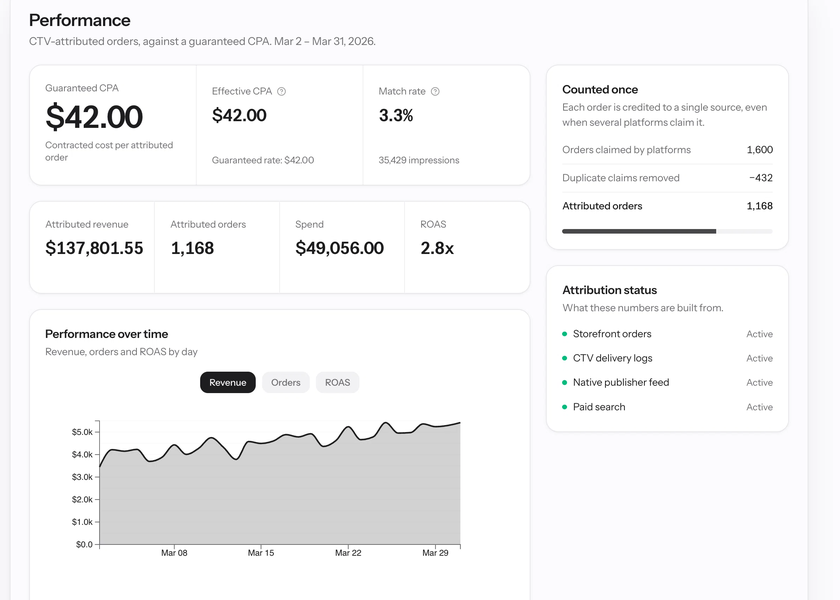
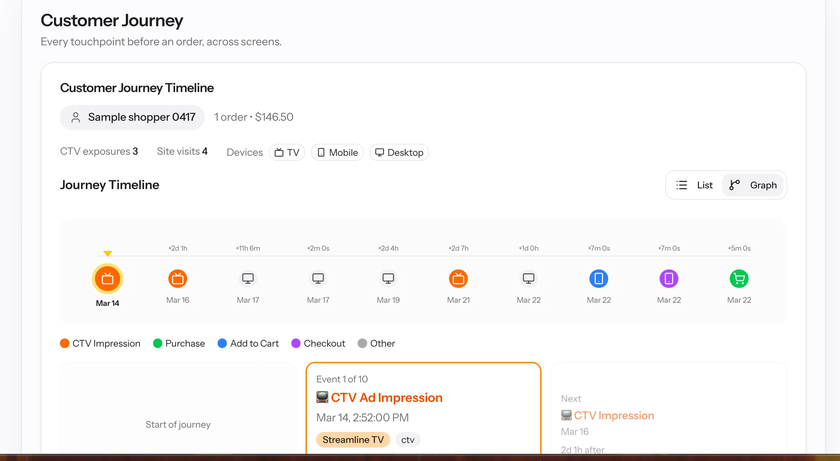
These are the two screens that are the proof — the full customer journey, and the honest number, counted once.

The "counted once" line is the whole argument: we only ever pay for the order we can prove, and we never double-count it.
Creators come in and crush it at $55. We get paid on a percentage, under that CPA model — a share of the verified orders, not a flat fee, not a percent of media spend.
The halo sits on top. The 1.24x annual customer halo — the repeat, the LTV, the "1 million jars" brand — is the free upside that the $55 number doesn't count.
90.1% of the TV orders had no pre-order session. A first-touch question — with the list of the creators inside it — attributes the "invisible" orders and is how we scale.
The proof cohort goes live. Every touchpoint tagged, every order counted once, the full journey visible. The number is the decision — if it clears, we turn the dial up and scale.
The survey is the way to scale: it turns the "invisible" orders into the attributed, payable, provable ones.